01Shop
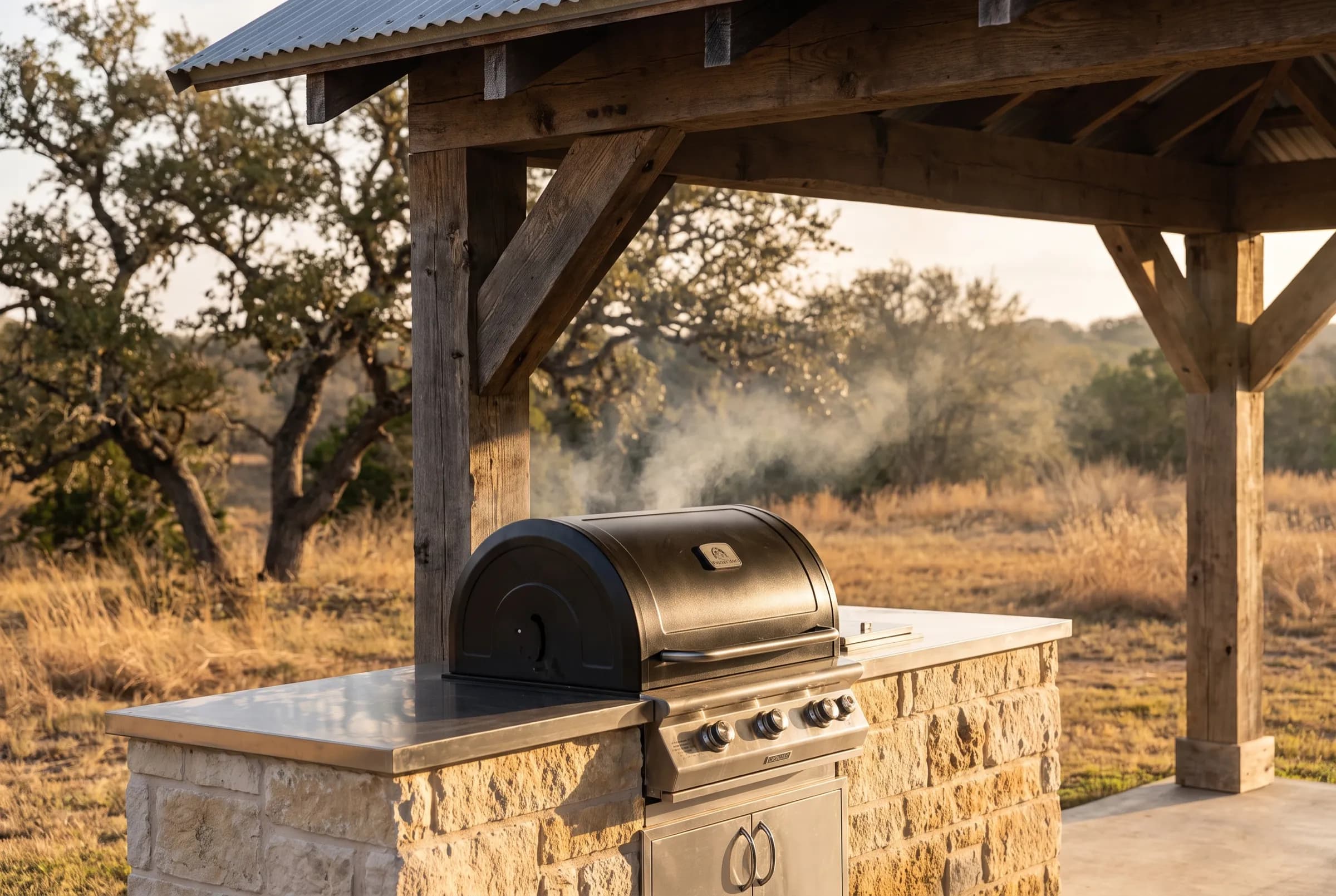
Grills, smokers, griddles
Freestanding and built-in units from the brands we carry. Priced online, delivered to your door, financing at checkout.
From $600 to $5,000
Browse the shop
Toronto · Oakville · Mississauga
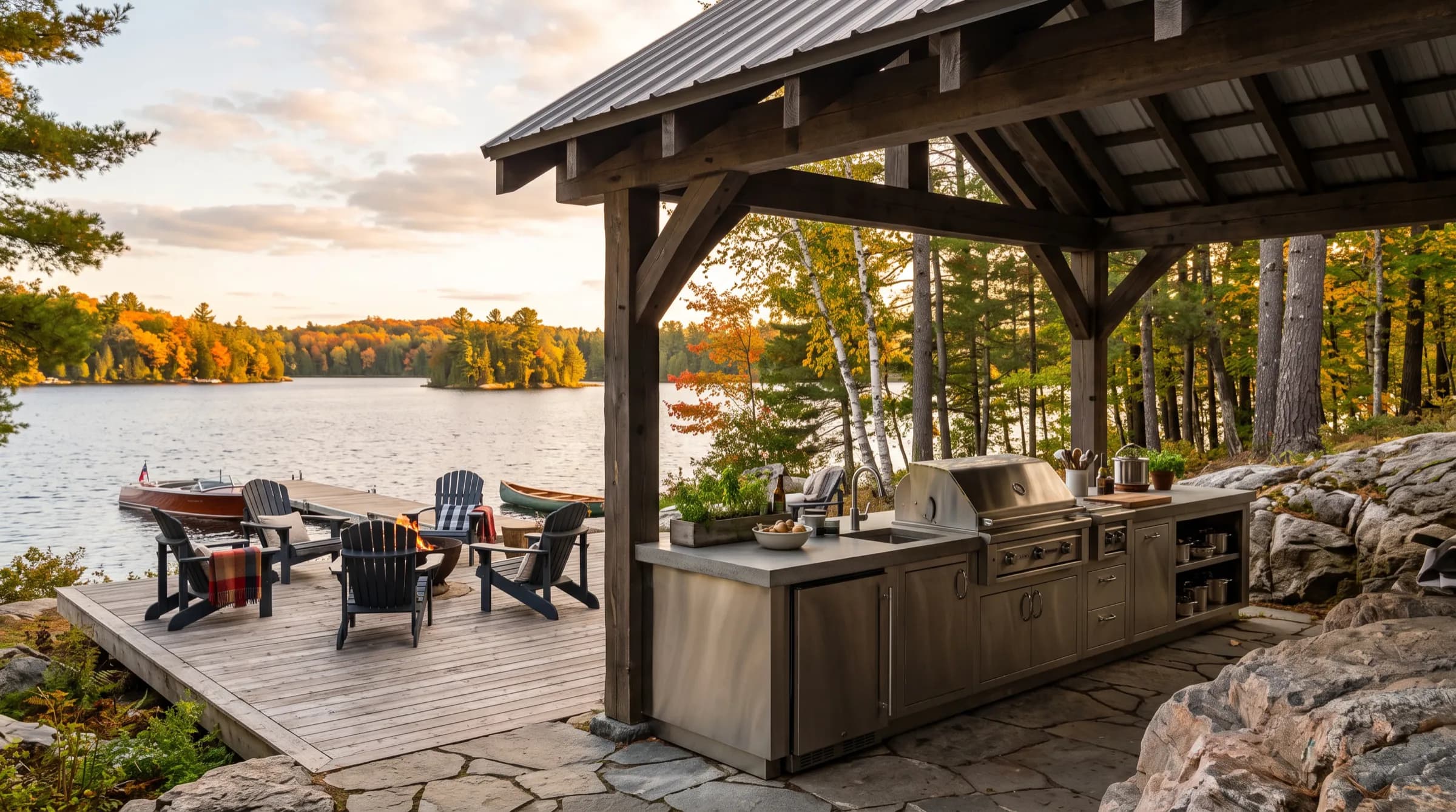
We design and supply the cabinetry, appliances, and stone — from Oakville estate lots to Muskoka lake country. A TSSA-licensed gas technician handles the hookup, an ESA-licensed contractor handles the wiring, and the footings go below whatever frost line your municipality sets. We don't install.
Two ways in
Freestanding and built-in units from the brands we carry. Priced online, delivered to your door, financing at checkout.
From $600 to $5,000
Browse the shopLayout, appliances, cabinetry and stone, drawn around how you actually cook and entertain — then supplied to your door. A licensed contractor sets it. From a single island to a full estate kitchen.
Most builds land between $30,000 and $150,000
Start a design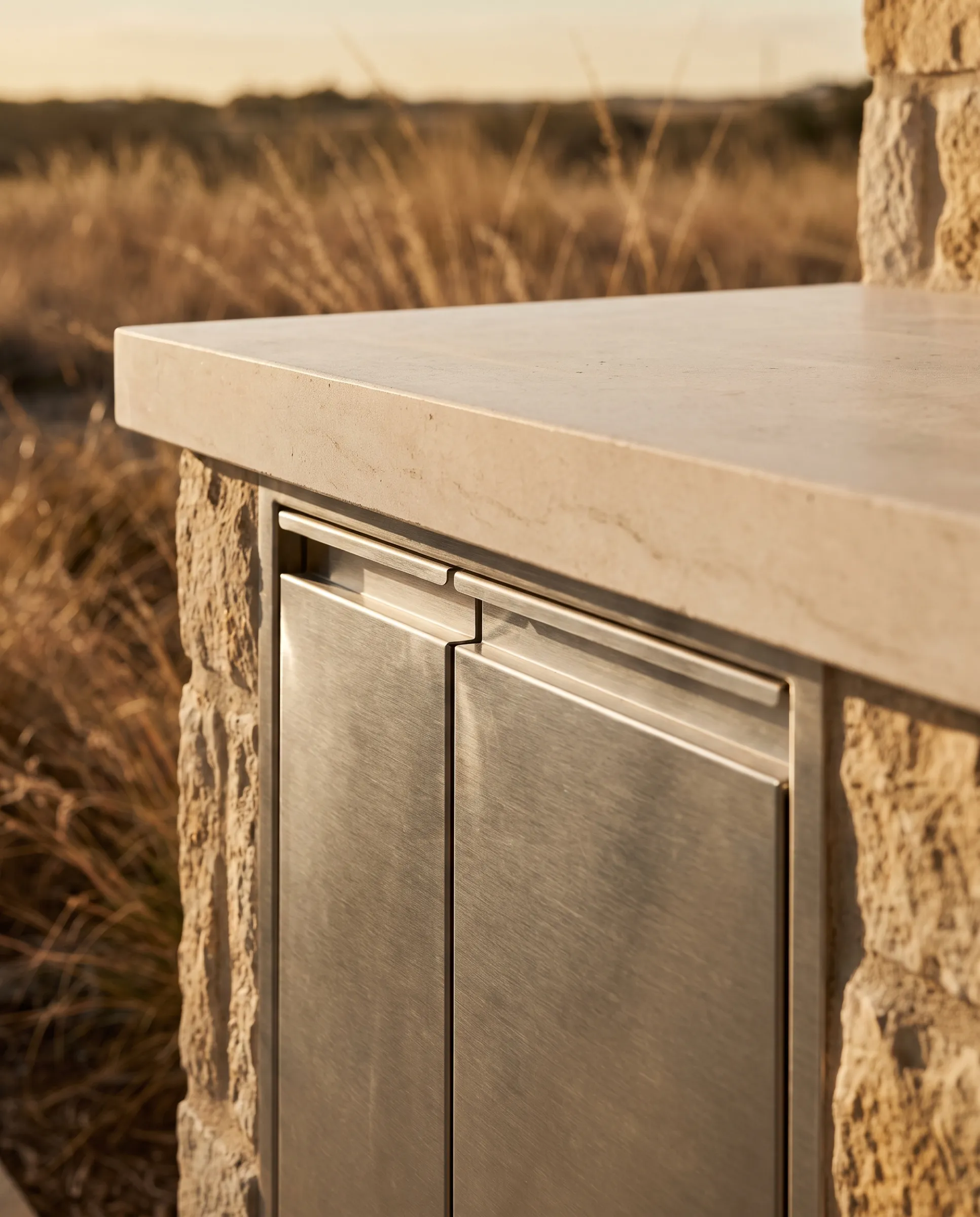
Materials
Ontario winters run well below -20°C in Ottawa and interior Muskoka, with dozens of freeze-thaw cycles a season that stress concrete, natural stone, and any cabinetry not rated for it. Footings have to sit below the local frost line, and that line is set municipality by municipality, not province-wide — roughly 1.2 m around Toronto and the Golden Horseshoe, deeper again toward Ottawa and cottage country. Confirm the exact number with the local building department before pouring. The Great Lakes are freshwater: there's no chloride salt air the way there is on the Gulf or Atlantic coasts, so full marine-grade 316 stainless isn't the default here — 304 does the job, with 316 reserved for kitchens sitting in direct splash of a heavily salted driveway or road. What Ontario does bring: de-icing salt underfoot every winter, lake-effect humidity, and — in cottage country — a build season that effectively runs May to October. Gas hookups require a TSSA-licensed gas technician; electrical work requires an ESA notification of work, a Licensed Electrical Contractor, and an ESA Certificate of Acceptance at the end.
Not every project needs the top of that list. On plenty of sites it is money better spent elsewhere, and we will tell you which one you are before you pay for it.
Where this comes from
BBQ Ontario comes out of BBQ Québec — three stores, a team of thirty-five, and hundreds of custom outdoor kitchens built in a place that spends five months a year under snow.
In Ontario that is not a story we have to turn around. It is the same winter. The freeze-thaw cycle, the footings below frost, the road salt — we have been building against all of it for fifteen years, in the same country.
What is different here is the same winter, minus the ocean — freshwater, road salt underfoot, and a frost line that changes by municipality. The discipline carries over intact; the specification is written for this province, not copied from ours.
Where we work
Your address decides the specification long before anyone talks about style. Footings below the local frost line — and a materials list built for cold, not for an ocean that isn't here. Find your city below — its page says what to spend the money on there, and where spending more changes nothing.
City of Toronto
Ultra-affluent inland estate enclaves — Bridle Path, Forest Hill, Rosedale — where lot scale and mature-tree logistics matter more than proximity to water.
Halton Region · Coastal
Lake Ontario estate market where an outdoor kitchen is now described locally as baseline, not upgrade, on properties above $2M.
Peel Region · Coastal
South Mississauga's Lake Ontario bluff enclaves — Lorne Park, Mineola, Port Credit — mature-canopy estate living at a step below Toronto's price point.
District Municipality of Muskoka · Coastal
Cottage-country seasonal-property market — waterfront-first, permit-gated near the shoreline, and winterized before ice-in every year.
Regional Municipality of Niagara · Coastal
Wine-country estate and heritage-town market with a built-in culture of outdoor entertaining, from vineyard estates to Old Town heritage homes.
City of London
Southwestern Ontario's fastest-growing large city — established wealth in Byron and Old North, a Western University-adjacent professional class.
1 more cities across Ontario, each with its own page. Not on the list? tell us where you are.
Before you ask
Usually not. The Great Lakes are freshwater — there's no constant airborne chloride the way there is on an ocean coast — so 304 stainless is the standard spec here. We'd upgrade specific components to 316 only if the kitchen sits in direct splash range of a driveway or road that gets heavy de-icing salt each winter.
A TSSA-licensed gas technician. In Ontario, a G3 certification covers supervised work; a G2 certification is what allows a technician to do unsupervised residential gas or propane work on equipment up to 400,000 BTUH, which covers a typical outdoor kitchen. We supply the appliances; the TSSA technician does the hookup and sign-off.
Any new circuit, outlet, or exterior wiring needs a notification of work filed with the Electrical Safety Authority (ESA) and has to be done — or at minimum inspected — by a Licensed Electrical Contractor. ESA issues a Certificate of Acceptance once the work passes, including checks for proper GFCI protection on exterior kitchen circuits.
Below the frost line set by your local building department. That depth varies by municipality — shallower in the south, meaningfully deeper toward Ottawa and interior Muskoka — so it's confirmed at the permit stage, not assumed from a province-wide number.
Start here
A photo of the patio and a rough budget is enough to begin. We come back with a layout, the material specification your site actually needs, and a real number for the whole supply — plus the contractor in your area who should be setting it.